Nature-Based Improvements, Local Voices
- 18 hours ago
- 2 min read
Our research lab is proud to announce the publication of a new open-access paper, led by Dr. Erich Wolff and the team, titled “Nature for the people, by the people: Negotiating values, attitudes and behaviours for implementing urban nature-based solutions in social housing.” This study, conducted in the heart of Bangkok’s social housing communities, reveals how co-created urban nature can truly thrive when shaped by those who experience it every day.

This work highlights original interviews with 38 residents of Bangkok’s social housing developments, distilling a new typology of values and attitudes towards neighbourhood greenery. With these insights, our lab advances the global conversation on how nature-based solutions (NbS) can address real urban challenges for low-income communities, and demonstrates the unique capacity for resident-driven greening in dense city environments.
Key insights from the paper
Listening and co-creating: NbS only succeed where community voices shape design, priorities, and ongoing care.
Everyday spaces, everyday transformation: Small, shared green interventions, like shaded courtyards and communal gardens, reshape not only the physical landscape but also how people use and value their neighbourhood space.
Designing for equity: By centering social housing in urban greening, we ensure that the vital benefits of cooler streets, cleaner air, and enhanced wellbeing reach everyone, not just privileged groups.
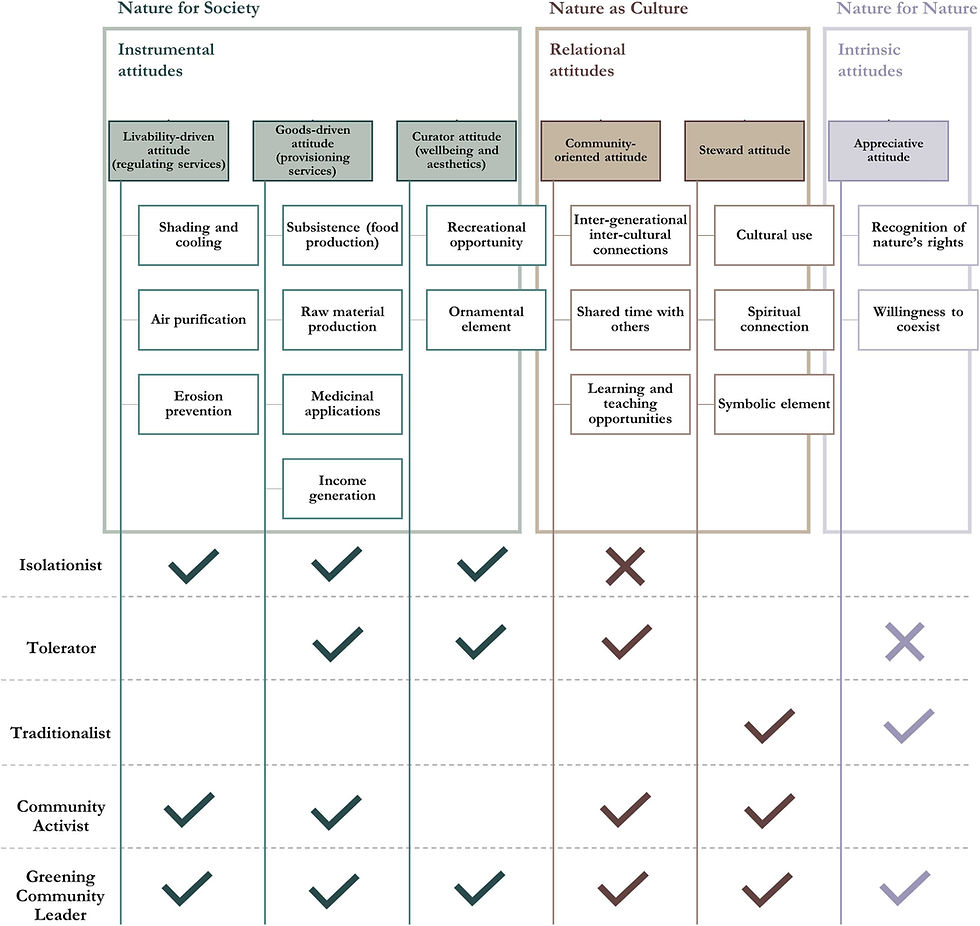
As cities invest in resilient and nature-based solutions, success depends on understanding local contexts and giving marginalized communities a platform. The research confirms that with genuine participation and locally relevant design, even small greening projects can become cherished assets that last.
Want to know what turns a forgotten courtyard into a blossoming community space?
Dive into the paper and discover how local voices and practical design create lasting change: https://doi.org/10.1016/j.ufug.2025.128973


